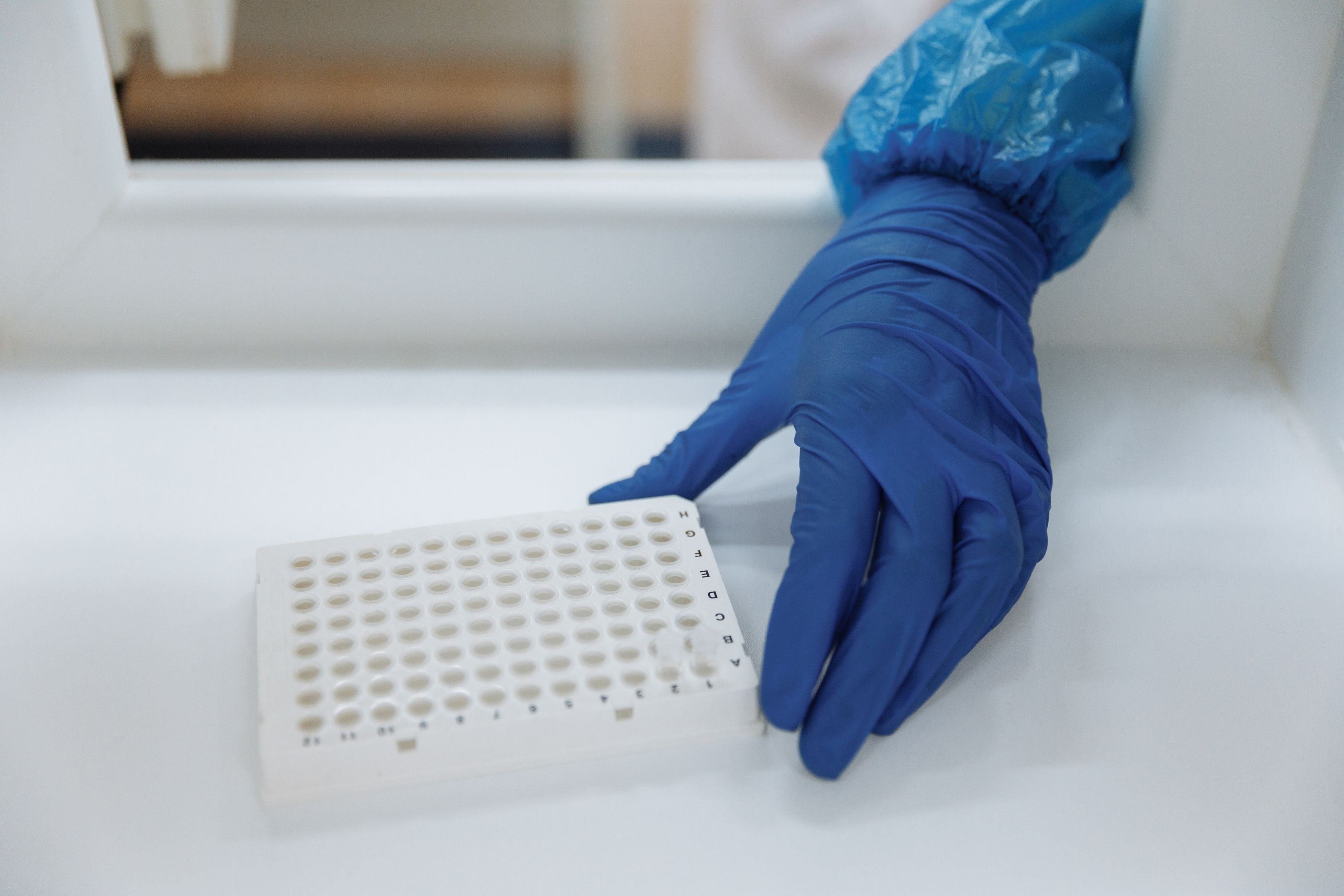
Imagine you’re a researcher investigating the effects of BPC-157 on fibroblast migration in a wound-healing model. You’ve designed your experiment carefully, calibrated your instruments, and ordered a batch of research-grade peptide from a well-reviewed supplier. The vials arrive looking perfectly legitimate — clean packaging, a printed label, even a document titled “Certificate of Analysis.” But weeks later, your results don’t align with published benchmarks. Your dose-response curves are flat where they should be steep. Your negative controls are behaving strangely.
After running mass spectrometry on the remaining sample, you discover the vial contained roughly 64% of the labeled peptide content, with an unidentified contaminant making up a meaningful portion of the rest.
This isn’t a far-fetched scenario. Versions of it play out in laboratories more often than the research community generally acknowledges. And it highlights a problem that has quietly grown alongside the rising popularity of synthetic peptides like BPC-157: quality is inconsistent, verification is difficult, and the consequences for scientific reproducibility are real.
BPC-157 and the Growing Research Interest
BPC-157 — short for Body Protection Compound-157 — is a synthetic pentadecapeptide comprising fifteen amino acids. It was originally identified as a partial sequence of a protein found in human gastric juice, and over the past two decades, a substantial body of preclinical work has explored its biological activity across multiple systems.
Studies have suggested that BPC-157 may interact with several growth factor pathways and signaling cascades. Chang and colleagues, for example, found that BPC-157 appeared to enhance growth hormone receptor expression in tendon fibroblasts in vitro, leading the authors to suggest a possible role in connective tissue biology PMID: 25268724. In a comprehensive theoretical review, Sikiric et al. outlined the framework connecting BPC-157 to the brain-gut axis, describing how preclinical observations suggested cross-system activity involving nitric oxide signaling and various peptide-mediated pathways PMID: 27667355. Earlier work by the same group cataloged the peptide’s observed interactions with the vascular system in preclinical models, noting a consistent relationship with nitric oxide modulation PMID: 23782145.
These studies — and a growing number of others — have fueled considerable demand for high-purity BPC-157 among researchers. For a detailed look at the peptide’s molecular profile and preclinical research landscape, see our BPC-157 compound page. But the very popularity that has expanded the market has also introduced quality challenges that the early literature rarely addressed. When a peptide is studied at precise concentrations in controlled experimental models, the integrity of the test substance isn’t a footnote — it’s a foundation.
The Quality Gap: What Independent Testing Reveals
The synthetic peptide marketplace has expanded rapidly. Unlike pharmaceutical-grade peptides — which must meet strict regulatory standards for identity, purity, potency, and sterility — research-grade peptides are often sold under considerably less oversight. The barrier to entry for suppliers is low, and the quality-control expectations are frequently undefined.
Independent analytical testing conducted by third-party organizations has repeatedly identified several recurring quality issues in research-grade peptides available to the consumer market:
Underdosing is the most commonly reported finding. The actual peptide content in a vial often falls well below what the label states. This isn’t necessarily intentional fraud; peptide synthesis and lyophilization are technically demanding processes, and even well-intentioned manufacturers can struggle with consistency. Some third-party reports have documented vials containing as little as 50–70% of the labeled peptide mass, with the balance made up of water content, mannitol, or other excipients that inflate the total weight.
Contamination is more concerning. Common impurities include trifluoroacetic acid (TFA), a cleavage reagent used during solid-phase peptide synthesis. If the purification step is inadequate, TFA can carry over into the final product at levels that may affect experimental outcomes. Heavy metal residues from reagents or synthesis equipment have also been detected in some samples. In certain cases, mass spectrometry has revealed entirely incorrect peptide sequences — suggesting synthesis errors, mislabeling, or, in the worst cases, product substitution.
Degradation represents a third category of concern. Peptides are inherently fragile molecules. Exposure to elevated temperatures, light, or humidity during shipping or storage can trigger hydrolysis or aggregation, reducing effective purity even when the product was correctly manufactured. A vial may leave the supplier in good condition and arrive at the lab door already compromised.
These quality issues are not unique to BPC-157, but they are particularly consequential for a peptide that is typically studied at defined and often narrow concentration ranges. Even modest discrepancies between labeled and actual potency could shift experimental outcomes and compromise reproducibility.
Why This Matters for Scientific Integrity
The implications extend beyond wasted reagents and repeated experiments. When a researcher publishes data generated using a peptide of unknown or unverified quality, those results enter the scientific literature without any marker that the test substance may have been substandard. Another laboratory attempting to replicate the work may source from a different supplier, use a different batch, and obtain different results — not because the biology is irreproducible, but because the tools were different.
This is a reproducibility challenge that affects many areas of science, but peptide research is especially vulnerable. Characterizing a synthetic peptide requires specialized analytical techniques — high-performance liquid chromatography (HPLC) for purity assessment, mass spectrometry for molecular identity confirmation, and amino acid analysis for accurate quantification. These capabilities aren’t trivially available to every lab, and not every researcher has the budget to independently verify every incoming shipment.
The result is a persistent information asymmetry. Suppliers may or may not conduct rigorous quality testing internally, and researchers may or may not have the means to independently verify what they receive. In this gap, the integrity of the research record is at stake.
What to Look For: A Practical Quality Checklist
For researchers sourcing BPC-157 or other synthetic peptides for laboratory use, several practical steps may help reduce the risk of receiving a compromised product:
-
Request a batch-specific Certificate of Analysis (CoA). A reputable supplier should provide documentation showing HPLC purity data (ideally with an actual chromatogram, not just a percentage), mass spectrometry results confirming the expected molecular weight, and, where applicable, residual solvent and TFA content analysis. Generic CoAs that aren’t tied to a specific manufacturing batch offer limited assurance.
-
Verify the analytical methods reported. The CoA should specify the techniques used. If it lists “≥99% purity” without showing supporting data, that number is difficult to trust. Look for specificity — a real HPLC trace, a mass spec spectrum, and clearly stated acceptance criteria.
-
Look for third-party or independent verification. Some suppliers submit their products to independent analytical labs for testing. This doesn’t guarantee consistency across all batches, but it does introduce an additional layer of accountability.
-
Ask about storage and shipping conditions. Peptides are temperature-sensitive molecules. Suppliers should be able to describe their cold-chain protocols and packaging practices.